Study Spanish Trail Learn Spanish in South America




LEARN SPANISH IN ARGENTINA: Top Schools & Travel Guide
Travel to Argentina
Argentina is the kind of place that feels larger than life.
From the tango-filled streets of Buenos Aires to the jaw-dropping glaciers of Patagonia, it’s a country that’s equal parts vibrant culture and natural wonder. Whether you’re sipping Malbec in a sun-drenched vineyard or snapping photos at Iguazú Falls, Argentina just has a way of stealing your heart.
Start in Buenos Aires, a city so alive it feels like it has its own heartbeat, the perfect option to start to learn Spanish in Argentina. One minute you’re wandering through Parisian-style boulevards, the next you’re in the colorful streets of La Boca, where tango dancers perform on every corner. On the weekends, don’t miss the antique markets in San Telmo or the gaucho vibes at the Feria de Mataderos. Buenos Aires is the kind of place where every street tells a story.
Wine lovers, welcome to paradise. Mendoza is the beating heart of Argentina’s wine country, where the Andes provide a stunning backdrop for some of the best Malbec you’ll ever taste. And if you’re a foodie, an asado (Argentinian barbecue) is non-negotiable. Picture juicy steaks cooked to perfection over an open flame, paired with a glass of red - it doesn’t get better than this.
For nature lovers, Patagonia is pure magic. Perito Moreno Glacier, with its cracking ice and sparkling blue hues, is like something out of a dream. And let’s not forget the hiking trails in El Chaltén or the windswept beauty of Tierra del Fuego, where the world feels like it just drops off into the ocean.
But Argentina doesn’t stop there. Up north, Iguazú Falls will leave you speechless with its sheer power and beauty, while Salta charms with its colonial vibes and access to the surreal landscapes of the northwest. Think rainbow-colored mountains, vast salt flats, and villages that feel frozen in time.
Argentina is more than a destination - it’s an experience. It’s late-night tango shows, sun-drenched vineyards, wild adventures, and cultural moments that stay with you long after you’ve left.
Once you visit, you’ll understand why people fall so hard for this country.
Best Cities to Learn Spanish in Argentina

Buenos Aires: Spanish Immersion in the Capital
Student life in the "Paris of the South" is fast-paced, sophisticated, and deeply academic. Outside of classes, you’ll find yourself practicing Spanish in grand historic cafés, browsing sprawling outdoor markets in San Telmo, or attending late-night tango milongas. The city’s metropolitan energy is perfect for social students who want to balance intensive study with world-class nightlife, diverse gastronomy, and a constant rotation of cultural festivals.
Mendoza: Language Learning in Wine Country
For students who enjoy a slower, more epicurean pace of life, Mendoza is the ideal classroom. Set against the backdrop of the Andes, daily life revolves around the city's lush plazas and wide, tree-lined avenues. You’ll likely spend your afternoons practicing "wine-tasting Spanish" at local vineyards or enjoying long, sun-drenched lunches, while adventure-seekers can head into the mountains for world-class trekking and rafting.
Cordoba: Student Life & Spanish Classes
As a massive university hub, Córdoba offers perhaps the most authentic "student" atmosphere in the country. The city is filled with young people, making it incredibly easy to find language exchange partners in the lively bars of Güemes. Life here is a blend of colonial history and youthful rebellion, where weekends are spent exploring the nearby Sierras mountains for hiking or swimming in river-fed pools.
Bariloche
Studying in Bariloche feels like being in a Swiss alpine village transported to the heart of Patagonia. Student life here is defined by the outdoors; after class, you can head to the shores of Lake Nahuel Huapi or hike to a mountain refugio for a craft beer. It is the perfect destination for active travelers who want to immerse themselves in nature during the day and enjoy cozy, chocolate-scented evenings by a fireplace.
Ushuaia: Spanish in Patagonia
Life at the "End of the World" offers a truly unique and rugged immersion experience. Because the community is smaller and more remote, students often find deeper connections with locals who are proud of their frontier heritage. It is a place for the intrepid student who wants to study in the mornings and spend their afternoons watching penguins, navigating the Beagle Channel, or exploring the dramatic, wind-swept landscapes of Tierra del Fuego.When the school day ends, the adventure begins. Argentina's diversity means you can study in a metropolitan hub on Friday and be hiking a Patagonian trail by Saturday morning. To make the most of your journey, scroll through our top travel destinations below.
What to See & Do While Studying in Argentina
18 Incredible Reasons You must visit1. Buenos Aires: European Charm & Tango Culture
One moment, you could be in Paris. Walk around the corner, and you’ll feel like you’re in Rome. Buenos Aires is South America’s most European city. Catch a tango show in an upscale restaurant or head to La Boca, the rough and ready neighborhood famous for its colourful houses, and for being the home of tango and football.
Don’t miss the San Telmo antique market and Feria de Mataderos, where gaucho culture comes alive.

2. Argentine Asado: A Must-Try Culinary Experience
Argentina is heaven for meat lovers. The asado (open-fire barbecue) is the country’s national dish, and traveling around the country you’ll definitely be invited for one. If not, just head to the nearest parrilla restaurant.
When it comes to asado, beef reigns supreme, whether it’s vacio (flank steak), asado de tira (short ribs) or bife de chorizo (sirloin steak). Vegetarian? You can go for provoleta, tasty grilled cheese, and hit the salad buffet.
3. Mendoza: High-Altitude Vineyards & Andes Views
Cafayate is a great place to make first contact with the world of Argentinian wine, but if you’re a serious foodie or wine connoisseur a visit to Mendoza is a must. The city is worth a visit for the stunning scenery alone, with the snowy peaks of the Andes just a stone’s throw away.
There are dozens of wineries all around the city, from high-end ones with Michelin starred restaurants, to simple family affairs selling vino patero (foot-pressed wine).

4. Iguazú Falls: South America’s Most Powerful Waterfalls
The Iguazù Waterfalls are South America’s most visited falls, with over a million tourist visits every year – and that is just on the Argentinian side.
The Brazilian side offers the ‘postcard pretty’ overview of the falls, but Argentina allows you to get up close, see water thundering down, creating a fairytale landscape of mist, rainbows & butterflies. La Garganta del Diablo is the most powerful section of the falls, don’t skip it.

5. Esteros del Iberá: Wildlife Watching in the Wetlands
Get off the beaten track at Esteros del Iberà, a wetland area in the province of Corrientes. The landscape is a mixture of swamps, bogs, rivers and lagoons, habitat of caimans, capybara (a cuddly-looking giant rat) and dozens of bird species.
There are farms in the area offering packages including food, accommodation and tours.

6. Misiones: Colonial History & Jesuit Ruins
Do you remember the movie Mission, with Jeremy Irons crossing a landscape of forests and waterfalls? The Jesuits explored what is now the province of Misiones in the 18th century, to convert the local Guaranì tribes to Christianity.
The shells of some colonial churches can still be visited, half crumbling half reclaimed by nature.

7. Salta: Colonial Architecture & Northern Culture
Salta is the largest city in the Argentinian Northwest. Here Andean culture is alive and well, think llama and alpaca roaming the mountains, ladies in colourful ponchos and rosy-cheeked children.
The city is a great place to slow down for a few days – enjoy the plazas and colonial churches, visit the excellent archaeology museum or ride the Tren a Las Nubes, one of the highest railway lines of the world.

8. Perito Moreno: Exploring the Patagonian Glaciers
Those brave souls who make it to Patagonia will be rewarded with silence & otherworldly nature, including some of the world’s most amazing glaciers.
Perito Moreno is one of just three glaciers in Patagonia that is still growing, and is one of the most easily accessible from the village of El Calafate.

9. El Chaltén: Hiking in the Argentine Trekking Capital
The cute village of El Chalten prouds itself of the title of Capital Nacional del Trekking. So, whether you’re a daredevil rock climber wanting to conquer the wall of Cerro Torre, or just want to hike surrounded by Patagonian nature, head to El Chalten.
The hike to Laguna de Los Tres is a great day-trip from El Chalten, and view of Cerro Fitzroy surrounded by a lake.

10. The Northwest: Rainbow Mountains & High-Altitude Deserts
Rent a car from Salta and spend a day (or three) exploring the high-altitude Northwestern desert, stretching northwards from Salta to the Bolivian border.
Some highlights include the Cerro de los Siete Colores near the village of Purmamarca, a mountain with a unique range of colors, Tilcara, where you can see some Inca ruins, and Salinas Grandes.
11. Córdoba: Student Life & Argentine Oktoberfest
Cordoba is located on the foothills of the Andes, on the pretty Suquia River. It’s Argentina’s second oldest city after Santiago del Estero, and the University of Cordoba was the first to be founded in the country. It's a lively student city, with a laidback but with crazy nightlife.
In October, all of Cordoba’s students head over to Villa General Belgrano, an Alpine-style village in the mountains, for Argentina’s very own version of Oktoberfest.

12. Península Valdés: World-Class Whale Watching
This peninsula on the Atlantic coast of Patagonia is a nature reserve and haven for a variety of marine mammals and birds. But the reason why tourists flock in numbers to Puerto Madryn, the Peninsula’s main settlement, is one: whales.
Peninsula Valdes offers world-class whale watching, southern right whales give birth in the warm waters around the peninsula between May and December.
13. Bariloche: The Stunning Argentine Lake District
The alpine-style town of Bariloche lies in the heart of Argentina’s Lake District, with stunning turquoise lakes surrounded by mountains and forests.
It’s a popular destination for winter activities, with southern hemisphere skiers and snowboarders flocking to the city when the snow falls and you feel like you’re in Switzerland. In summer, the cool temperatures make Bariloche ideal for hiking.
14. Ushuaia: Language Learning at the End of the World
Argentinian sweethearts have a saying, that roughly translates as ‘with you, I will go to the end of the world’. The ‘fin del mundo’ is the magical city of Ushuaia, the southernmost in the world, and capital of the island of Tierra del Fuego.
The southern nights are long and full of stars, and the sunsets are like nowhere else on earth.

15. Trelew: Discovering Argentina’s Welsh Heritage
Once you get to Trelew, you’ll be forgiven to believe you’re in Wales in the United Kingdom. The town prides itself of its Welsh heritage, and it’s a hit with tourists wanting to experience ‘traditional Welsh tea’ in one of many quaint teahouses.
Welsh settlers arrived in the area at the end of the 19th century, and there are still about 1,500 Welsh-speakers living locally.

16. Tigre Delta: River Life & Island Getaways from BA
The village of Tigre lies on banks of the Rio de La Plata, the delta formed by the Paranà and Uruguay rivers as they meet the Atlantic Ocean.
Located within the Buenos Aires province, Tigre is surrounded by streams and islets and is a popular spot for wealthy Porteños to have their weekend homes. Visit during the week to tour the delta on a mahogany boat, watch the cappuccino-coloured waters of the Rio go by.

17. Ruta 40: The Ultimate Argentine Road Trip
Stretching from the Bolivia-Argentina border at La Quiaca to the city of Rio Gallegos in Southern Patagonia, the Ruta 40 is Argentina’s longest at 5,140 km.
It’s also a hell of a ride – unpaved in most sections, it runs along the Andes in the western part of the country, traveling over high passes and through ghost villages. Be warned, a 4x4 will definitely come in handy.
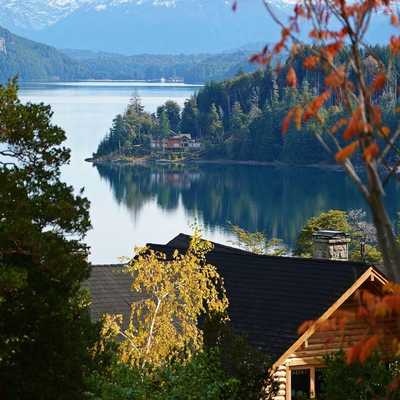
18. Villa La Angostura: The Gateway to the Seven Lakes
Villa La Angostura is a charming town in Argentine Patagonia, located on the shores of Nahuel Huapi Lake in Neuquén Province. Known as the "Garden of Patagonia," it offers stunning landscapes, alpine-style architecture, and outdoor activities like hiking, skiing, and fishing.
As the gateway to the Route of the Seven Lakes, it’s a perfect destination for nature lovers seeking tranquility and scenic beauty.
Argentina Travel Itineraries for Spanish Language Students
4 Customized Routes to travel and learn Spanish in ArgentinaWhether you have two weeks or two months, you’ll have a blast in Argentina. Below you’ll find some suggested itineraries, decicated stops to take Spanish classes and travel tips to help you have a great time in this stunning country.
1 - Rapido Travel: The North-Central Highlights

This is a whirlwind tour of North-Central Argentina, perfect for a short visit. Make use of night buses or internal flights if you wish to save time.
The Route: Buenos Aires (day trip to Tigre) – Iguazù – Salta (day trip to Cafayate, a couple of days touring the northwest) – Mendoza – Cordoba – Buenos Aires
Where to Learn Spanish: Stop in Buenos Aires for your first week. Starting in the capital allows you to get comfortable with the Argentine accent and local lunfardo (slang) before heading into the provinces.
Recommended
Spanish Schools
Here's our pick for the best Spanish Schools in Buenos Aires, Cordoba & Mendoza, Argentina.
2 - Tranquilo Travel: The Ultimate Argentina Route

From north to south, then north again, this is the ultimate Argentinian itinerary – allow at least a couple of months to give this amazing country the time it deserves, and enjoy the laid back lifestyle of country villages.
The Route: Salta (tour the northwest en route from Bolivia) – Cafayate – Mendoza – Cordoba (look for a Spanish school in Cordoba and stop for a course) – Bariloche – El Chalten – Perito Moreno – Ushuaia – Peninsula Valdés – Buenos Aires
Where to Learn Spanish: Stop in Buenos Aires for your first week. Córdoba is the ideal halfway point for a study break. As a vibrant student city, it offers a high-energy environment to practice your conversation skills with locals your own age between your mountain and vineyard adventures.
Recommended
Spanish Schools
Here's our pick for the best Spanish Schools in Buenos Aires, Cordoba & Mendoza, Argentina.
3 - Road Less Travelled: Wetlands & Wildlife

Love nature? Fancy getting off the beaten track? This itinerary is for you. Explore the wilder side of the country, from lush wetlands to the rugged Atlantic coast.
The Route: Iguazù – Misiones – Esteros del Iberà (for wildlife watching) – Puerto Madryn (for Peninsula Valdes) – Trelew – Ushuaia (then head deep into Tierra del Fuego)
Where to Learn Spanish: Before jetting off into the remote wild, base yourself in Buenos Aires for a week of intensive classes. Learning essential travel vocabulary here will be invaluable for navigating the less-touristy regions where English is rarely spoken.
Recommended
Spanish Schools
Here's our pick for the best Spanish Schools in Buenos Aires & Ushuaia, Argentina.
4 - Mountain Junkies: Trekking the Andes

Mountain lovers are spoiled for choice here. Follow the mighty Cordillera from north to south along the iconic Ruta 40 for an adventure to remember.
The Route: Salta (for trips into the Argentine northwest) – Mendoza (to climb Aconcagua) – Bariloche (skiing in winter, hiking in summer) – El Calafate (for Perito Moreno) – El Chalten (to hike and rock-climb) – Ushuaia (because everybody needs to see the fin del mundo)
Where to learn Spanish: Spend a week in Bariloche at the heart of the Lake District. Studying here allows you to balance morning classes with afternoon hikes, providing a perfect mix of academic immersion and outdoor exploration.
Recommended
Spanish Schools
Here's our pick for the best Spanish Schools in Mendoza, Bariloche & Ushuaia, Argentina.
Essential Travel Tips for Your Argentina Trip
Practical Info for Students & TravelersSafety & Cultural Etiquette in Argentina
Argentinians value politeness and enjoy social interactions. Greeting with a kiss on the cheek is common, especially in urban areas. Stay aware of your surroundings, particularly in crowded tourist spots, to avoid pickpocketing.
Outside major cities learning Argentinian Spanish is particularly important, as English is not widely spoken.
Currency & The Blue Dollar: Money Tips for Students
The currency in Argentina is the Argentine peso (ARS). Cash is often preferred for small purchases, though credit cards are widely accepted in major cities.
Due to fluctuating exchange rates, familiarize yourself with the "blue dollar" rate, an unofficial exchange rate that may offer better value for exchanging cash (USD or EUR) at authorized exchange houses or hotels.
Best Time to Visit & What to Pack
The best time to visit varies by region: Patagonia is ideal in summer (November to March), while the north, including Iguazú Falls, is best during cooler months (April to October).
Pack according to your itinerary; layers are essential for Patagonia's unpredictable weather, and sunscreen is a must for sunny destinations like Mendoza or Salta.
Getting Around: Transportation & Public Transit
Argentina offers diverse travel options, including affordable buses for long-distance travel and the "subte" (subway) in Buenos Aires. Ride-hailing apps like Cabify or Uber are safer alternatives to traditional taxis.
When traveling between cities, consider flying for convenience, as Argentina spans vast distances.
Where to explore after Argentina? Visit our comprehensive itineraries and country guides!
1, 3 & 6 MonthItineraries
Learn Spanish in these 8 Countries


